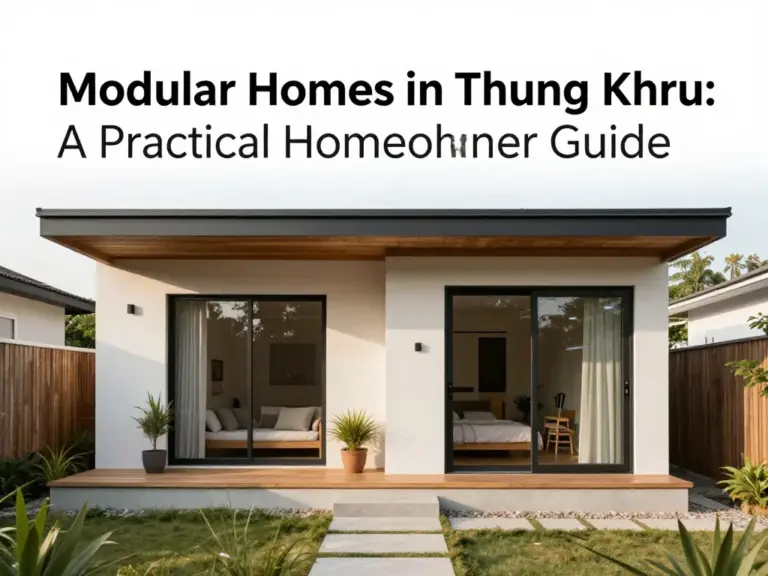
Modular Homes in Thung Khru: A Practical Guide for Homeowners
modular homes in Thung Khru: As the landscape of residential construction evolves, homeowners and investors are increasingly looking for efficient, sustainable, and cost-effective housing solutions. If you are exploring the property market in Bangkok, specifically the residential districts of Thung Khru, you might have encountered the growing interest in modular homes. These structures, often referred to as prefabricated or “prefab” homes, represent a significant shift in how we approach building, offering speed and precision that traditional construction methods often struggle to match.
Understanding Modular Homes in Thung Khru
Modular homes in Thung Khru are not merely temporary structures; they are permanent residences constructed using advanced manufacturing processes. Unlike traditional “stick-built” homes where every component is assembled on-site, modular homes are built in climate-controlled factory environments. Once the modules are completed, they are transported to the final site in Thung Khru, where they are assembled onto a prepared foundation.
For residents of Thung Khru, this method offers a unique advantage: the construction timeline is significantly reduced. Because site preparation and factory manufacturing occur simultaneously, you can cut total project time by up to 50% compared to traditional on-site building methods.
Key Advantages of Modular Construction
Choosing a modular approach comes with several technical and practical benefits that are particularly relevant for the urban and suburban mix found in Bangkok districts.
- Quality Control: Building in a factory setting eliminates weather-related delays and ensures that materials are not exposed to rain or humidity during construction.
- Sustainability: Modular construction generates significantly less waste than traditional building because materials are measured and cut with precision in a controlled environment.
- Cost Predictability: With a set factory price and reduced labor hours on-site, modular homes often provide better budget control, reducing the risk of cost overruns typical of traditional builds.
- Structural Integrity: These homes are built to withstand the rigors of transportation and craning, often resulting in sturdier framing than some traditional methods.
Comparing Construction Methods
| Feature | Modular Homes | Traditional On-Site |
|---|---|---|
| Construction Speed | Fast (Weeks to Months) | Slower (Months to Years) |
| Cost Predictability | High | Moderate (Vulnerable to variations) |
| Weather Impact | Minimal | High |
| Design Flexibility | High (Standardized Modules) | Very High (Fully Custom) |
While the benefits are clear, building any home in Bangkok requires strict adherence to local regulations. Before committing to modular homes in Thung Khru, homeowners must navigate specific local considerations.
1. Site Accessibility
Because modular homes are transported in large sections, the delivery route is critical. In Thung Khru, where some roads may be narrow or have overhead obstructions like power lines, you must conduct a thorough site assessment with your manufacturer to ensure their trucks and cranes can access your plot.
2. Foundation Requirements
Your modular home will sit on a foundation prepared on-site. In the Thung Khru area, soil conditions can vary. Engaging a local engineer to assess soil bearing capacity is essential to ensure your foundation is stable, as heavy modular units require precise leveling and support.
3. Permitting and Zoning
Ensure that your property is zoned for the type of dwelling you intend to build. Modular homes are subject to the same building codes and permit requirements as traditional homes. You will need to obtain the necessary construction permits from the local district office before assembly begins.
Checklist for Prospective Modular Homeowners
Use this checklist to prepare for your modular home project:
- Verify Site Access: Check for narrow roads, low hanging wires, and turning radii on your route.
- Soil Analysis: Conduct a geotechnical study of your plot to determine foundation needs.
- Manufacturer Vetting: Ask for references and visit past projects to inspect build quality.
- Utility Connections: Coordinate with local utility providers for electricity, water, and sewage hookups early.
- Permit Filing: Ensure all architectural drawings are approved by the local district authority.
Conclusion
Modular homes in Thung Khru offer a sophisticated, efficient, and modern path to homeownership. By leveraging factory precision and reduced on-site construction times, you can create a high-quality living space that meets your needs while avoiding many of the pitfalls of traditional construction. As with any significant investment, success lies in thorough preparation, professional consultation, and careful planning of your site logistics.
Frequently Asked Questions (FAQ)
1. Are modular homes in Thung Khru safe during the rainy season?
Yes. Because the main structure is built in a factory and then sealed on-site, modular homes are often more weather-tight than homes built entirely in the elements. However, proper foundation drainage is still critical in Bangkok’s climate.
2. Can I customize the design of my modular home?
Absolutely. Most manufacturers offer a range of floor plans and finishes. While you are working with modular units, you can combine them in various configurations to create a layout that suits your lifestyle.
3. How long does the on-site assembly take?
The actual assembly on-site is very fast, often taking only a few days once the foundation is ready. However, the total timeline includes site preparation, utility hookups, and interior finishing, which may take several weeks.
4. Is a modular home considered a permanent structure?
Yes, once a modular home is attached to a permanent foundation, it is legally and structurally considered a permanent dwelling, identical to a traditional house in terms of longevity and property rights.