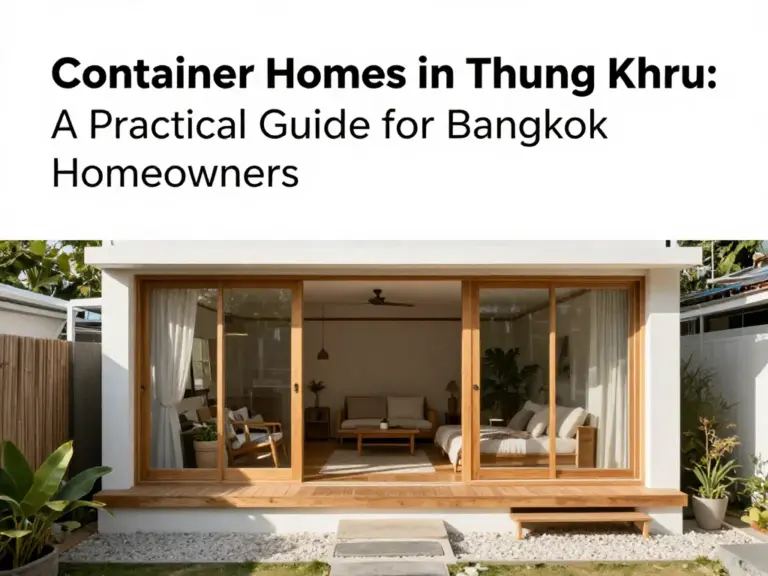
Container Homes in Thung Khru: A Practical Guide for Bangkok Homeowners
- Container Homes in Thung Khru: A Practical Guide for Bangkok Homeowners
- container homes in Thung Khru: The Appeal of Container Living in Bangkok
- Key Considerations for the Tropical Climate
- Comparison: Container Homes vs. Traditional Construction
- Legal and Zoning Requirements in Thung Khru
- Checklist for Prospective Homeowners
- Maintenance and Longevity
- Conclusion
- Frequently Asked Questions (FAQ)
The trend of modular construction is reshaping residential design across Bangkok, and Thung Khru is no exception. For homeowners looking for affordable, modern, and rapid housing solutions, container homes in Thung Khru offer a compelling alternative to traditional concrete structures. However, building with shipping containers in a tropical urban environment requires more than just stacking steel boxes; it demands a deep understanding of local climate challenges, zoning regulations, and structural integrity.
This guide explores the practicalities of container architecture in this specific district of Bangkok, helping you make informed decisions before you commit to your project.
container homes in Thung Khru: The Appeal of Container Living in Bangkok
Thung Khru, with its mix of residential neighborhoods and evolving urban spaces, provides a unique canvas for modular homes. Shipping containers are inherently durable, designed to withstand harsh maritime conditions, which makes them surprisingly adaptable for residential use. Beyond durability, they appeal to the eco-conscious homeowner because they repurpose existing industrial materials, significantly reducing the carbon footprint associated with traditional brick-and-mortar construction.
For many in Thung Khru, the primary driver is efficiency. A container home can be prefabricated off-site and assembled in a fraction of the time it takes to build a standard house, minimizing noise and disruption in established neighborhoods.
Key Considerations for the Tropical Climate
While steel containers are robust, they are also excellent conductors of heat. Building container homes in Thung Khru without adequate climate control strategies is a recipe for an uncomfortable living environment. In Bangkok’s high humidity and intense sun, thermal management is not optional—it is the most critical design element.
Insulation Techniques
You cannot simply finish the interior walls of a container with drywall. You need a robust insulation layer, such as sprayed polyurethane foam or high-quality mineral wool, to create a thermal break between the exterior steel and the interior living space. Proper insulation prevents the “oven effect” during the day and keeps the interior cool at night.
Ventilation and Orientation
Strategic placement is vital. Orienting your container home to minimize direct afternoon sun exposure on the longest walls can drastically reduce cooling costs. Incorporating large windows for cross-ventilation and using roof overhangs (or secondary roof structures) to shade the container shell are essential design strategies for Thung Khru residents.
Comparison: Container Homes vs. Traditional Construction
| Feature | Container Home | Traditional Concrete |
|---|---|---|
| Construction Speed | Fast (Prefabricated) | Slow (On-site) |
| Cost Efficiency | High (if design is simple) | Variable |
| Durability | High (Steel structure) | High (if maintained) |
| Thermal Management | Requires specialized insulation | Naturally better thermal mass |
| Customization | Modular/Limited to box shape | Unlimited |
Legal and Zoning Requirements in Thung Khru
Before purchasing containers, you must navigate the local regulatory landscape. In Bangkok, any structure intended for habitation requires a building permit. The Thung Khru district office, like others in Bangkok, mandates that your building plans be signed off by a licensed architect and structural engineer.
Because container homes are non-traditional, officials will scrutinize the structural modifications. Cutting large holes for windows or joining containers compromises the structural integrity of the steel box. You must provide engineering proof that these modifications are reinforced properly. Ensure your builder is familiar with the Department of Public Works and Town & Country Planning standards.
Checklist for Prospective Homeowners
If you are moving forward with a project in Thung Khru, follow this checklist to ensure you cover your bases:
- Site Assessment: Check the soil bearing capacity of your plot; heavy containers require proper foundation work (concrete piers or slabs).
- Container Selection: Inspect containers for rust, chemical spills, or structural dents before purchase.
- Architectural Plans: Hire a local architect who has experience with modular construction to handle the permit submission.
- Insulation Plan: Prioritize high-grade thermal insulation and moisture barriers.
- Professional Welder: Ensure all structural modifications are handled by certified welders, not general contractors.
Maintenance and Longevity
The biggest enemy of a steel container home in Bangkok is rust. The high humidity and seasonal rain require proactive maintenance. You should plan for regular inspections of the exterior paint and sealants. If the protective coating is breached, rust can spread quickly. Using marine-grade exterior paints and checking roof seals twice a year will significantly extend the life of your home.
Conclusion
Building container homes in Thung Khru is a rewarding endeavor for those who value modern aesthetics and efficient construction. By respecting the unique climatic challenges of Bangkok and adhering strictly to local building codes, you can create a safe, sustainable, and stylish home. Start by finding a reputable architect and ensuring your insulation strategy is world-class, and you will be well on your way to a successful build.
Frequently Asked Questions (FAQ)
They can be, but not always. While the shell is cheaper, the costs of specialized insulation, structural reinforcement, and transport can bring the total cost close to traditional methods. Savings usually come from the speed of construction rather than materials alone.
Yes, shipping containers are designed to be stacked. However, this requires significant structural engineering to ensure the foundation can handle the load and the corner castings are properly welded and reinforced.
Yes. Any permanent residential structure requires a building permit from the local district office. You must submit structural engineering reports along with your architectural plans.